
|5 min read|Verena Merklinghaus
Pricing Strategies for Online Shops: 7 Proven Methods to Boost Profit
pricing strategies online shopecommerce pricingpricing strategyShopify pricingWooCommerce pricingonline store profit optimization

Source: Unsplash
1. Cost-Plus Pricing
The simplest method: costs + desired margin = selling price. Formula:Selling Price = Cost × (1 + Markup%)
Example: Product with $12 purchase price, 50% markup
Selling Price = $12 × (1 + 0.50) = $18.00
Profit        = $18.00 − $12.00 = $6.00
Margin        = $6.00 / $18.00 = 33.3%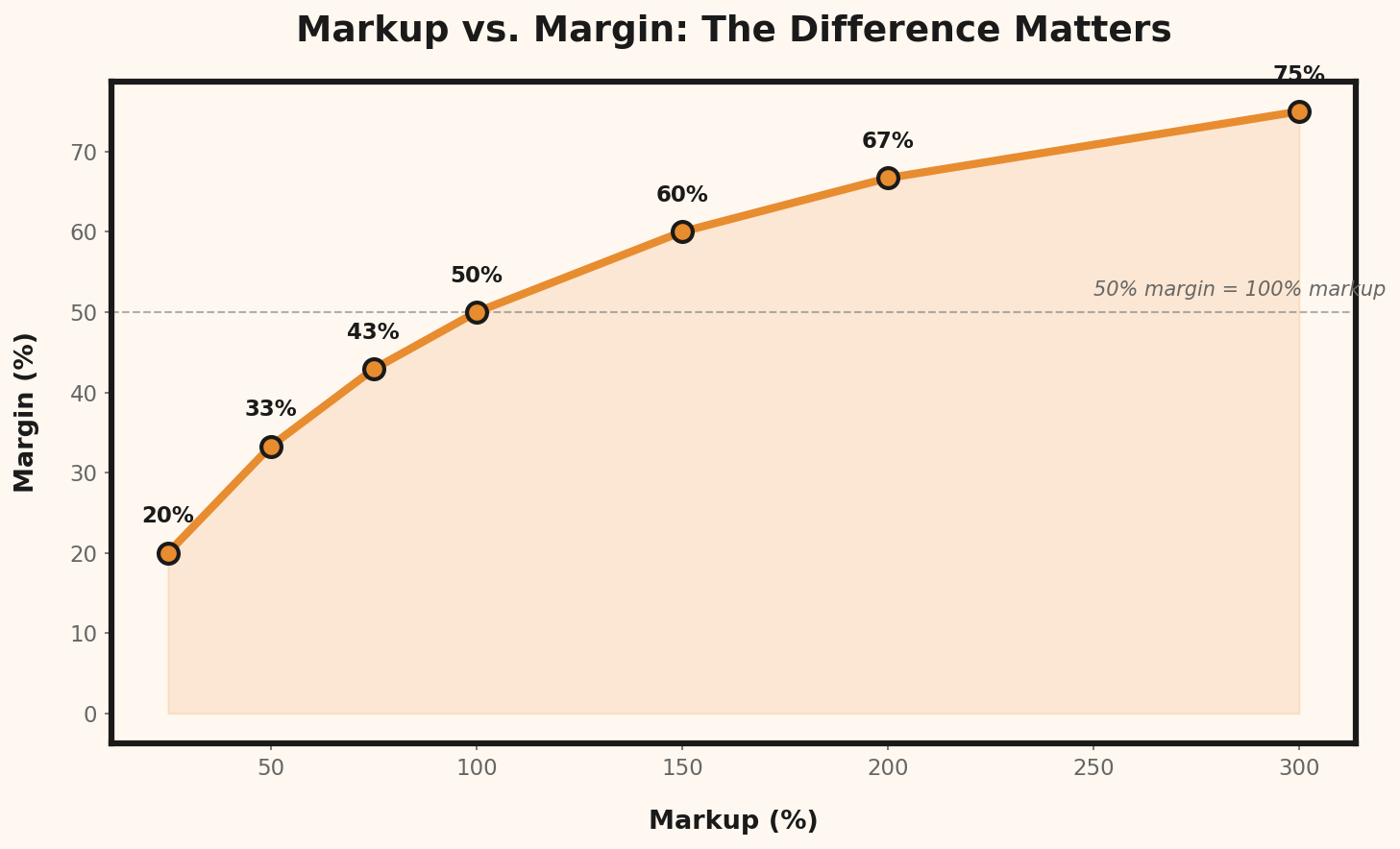
Markup vs. Margin — Quick Reference
────────────────────────────────────
Markup %   →  Margin %
  25%      →   20.0%
  50%      →   33.3%
  75%      →   42.9%
 100%      →   50.0%
 150%      →   60.0%
 200%      →   66.7%

Formula: Margin = Markup / (1 + Markup)
Example: 0.50 / 1.50 = 0.333 = 33.3%- Physical products: 50–100%
- Digital products: 200–500%
- Handmade products: 100–300%
2. Competitive Pricing
You position your price relative to the competition:- Price leader: 5–15% below the market average
- Market price: Within 3% of the average
- Premium: 10–30% above the average

Source: Unsplash
3. Psychological Pricing
Small tricks with big impact:- Charm pricing: $29.99 instead of $30 — sounds trivial, but it boosts sales by 8–24%
- Anchor pricing: Original price crossed out next to the sale price
- Prices ending in 7: $27, $47, $97 feel "calculated" rather than arbitrary
- Left-digit effect: $39.99 is perceived as "in the thirties," not "almost forty"

Source: Unsplash
4. Value-Based Pricing
The price is based not on your costs, but on the value to the customer. Example: A handmade leather wallet costs $8 to produce. Cost-plus at 100% = $16. But customers looking for handmade leather expect $40–80. A price of $16 signals "cheap" and hurts sales.Cost-plus (100%): $8 × 2.00 = $16 → Margin 50%
Value-based ($60 price): $60 − $8 = $52 profit → Margin 86.7%
Difference per sale: +$44 extra profit through value-based pricing5. Bundle Pricing
Instead of discounting individual products, you create packages:- Main product + accessories as a set
- "Starter kit" with 3–5 products
- "Value pack" with volume discount
6. Dynamic Seasonal Pricing
Adjust prices systematically based on demand:- Peak season: +5–10% (demand supports it)
- Off-season: -10–15% (keeps revenue flowing)
- Events: Black Friday, Cyber Monday, Valentine's Day — plan pricing 4 weeks ahead
7. Freemium / Loss Leader
One product is offered at or below cost to attract customers to the store. Profit comes from additional sales. Example: Offer a bestseller at cost to generate traffic. On the product page, cross-sell high-margin accessories. Risk: If customers only buy the loss leader and nothing else, you lose money. This only works with a well-thought-out upselling strategy.Which Strategy Fits Your Shop?
| Situation | Recommended Strategy |
|---|---|
| New to the market, little data | Cost-plus as a baseline |
| Many direct competitors | Competitive pricing |
| Unique/handmade products | Value-based pricing |
| High seasonality | Dynamic pricing |
| Wide product range | Bundles + loss leader |
| Premium positioning | Value-based + psychological |
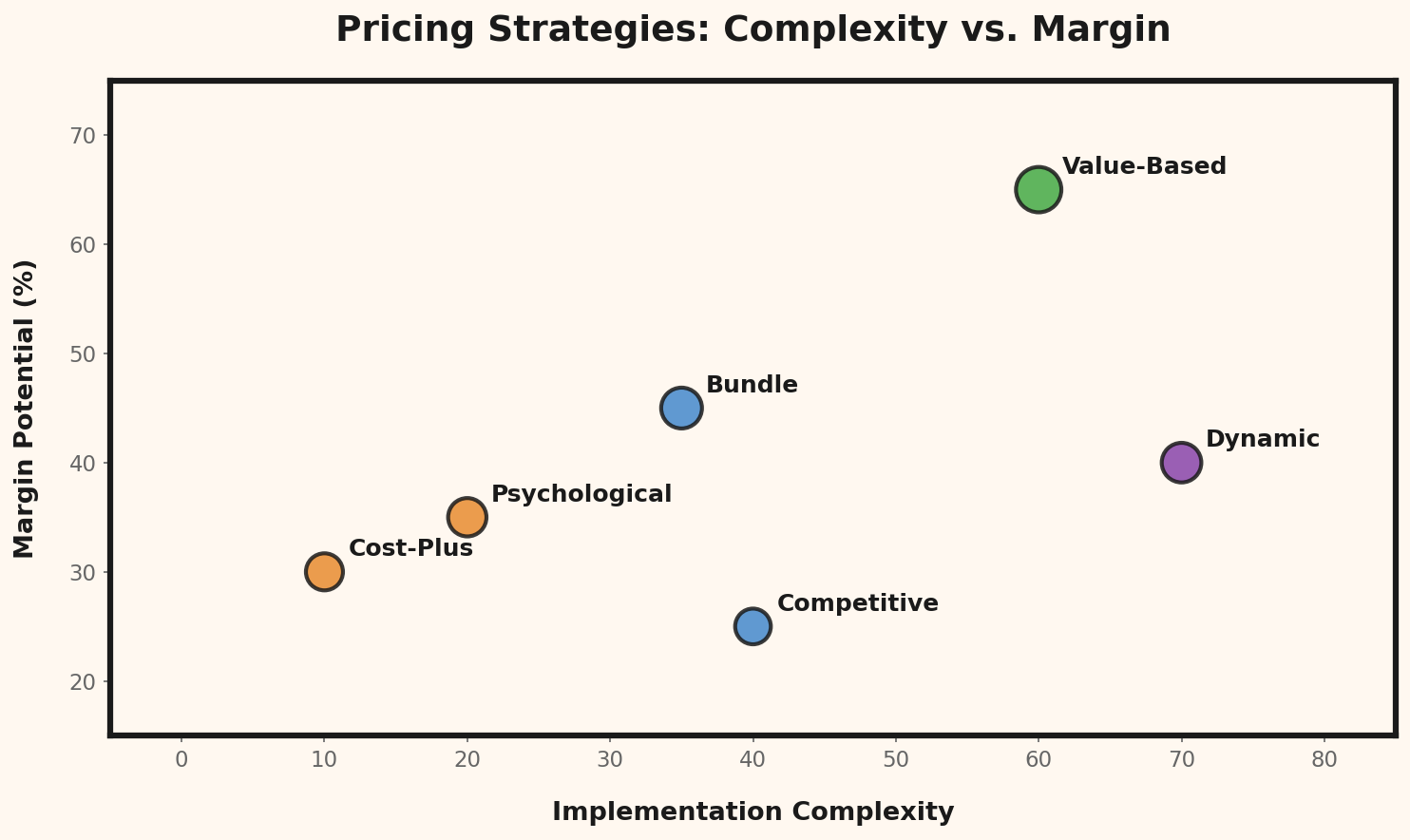
Pricing Strategy Pros and Cons at a Glance
| Strategy | Pros | Cons | Complexity |
|---|---|---|---|
| Cost-Plus | Simple to calculate, guarantees minimum margin | Ignores market demand and competition | Low |
| Competitive | Market-aligned, customers see fair pricing | Requires constant monitoring, risk of price wars | Medium |
| Psychological | Easy to implement, proven sales uplift 8–24% | Limited impact on its own, must be combined | Low |
| Value-Based | Highest margins, strong brand positioning | Requires deep customer understanding | High |
| Bundle | Increases average order value, hard to compare | Complex inventory management | Medium |
| Dynamic/Seasonal | Maximizes revenue across demand cycles | Can irritate customers if done too frequently | Medium |
| Loss Leader | Drives traffic, builds customer base | Risk of losses without effective upselling | High |
