
|4 min read|Amara Winkler
How to Set Prices in an Online Store: A Practical Guide
online store pricingecommerce pricing strategyhow to price productspricing for online shopsprofit margin ecommercepricing psychologycompetitive pricingmarkup calculator

Source: Unsplash
Step 1: Know Your True Costs
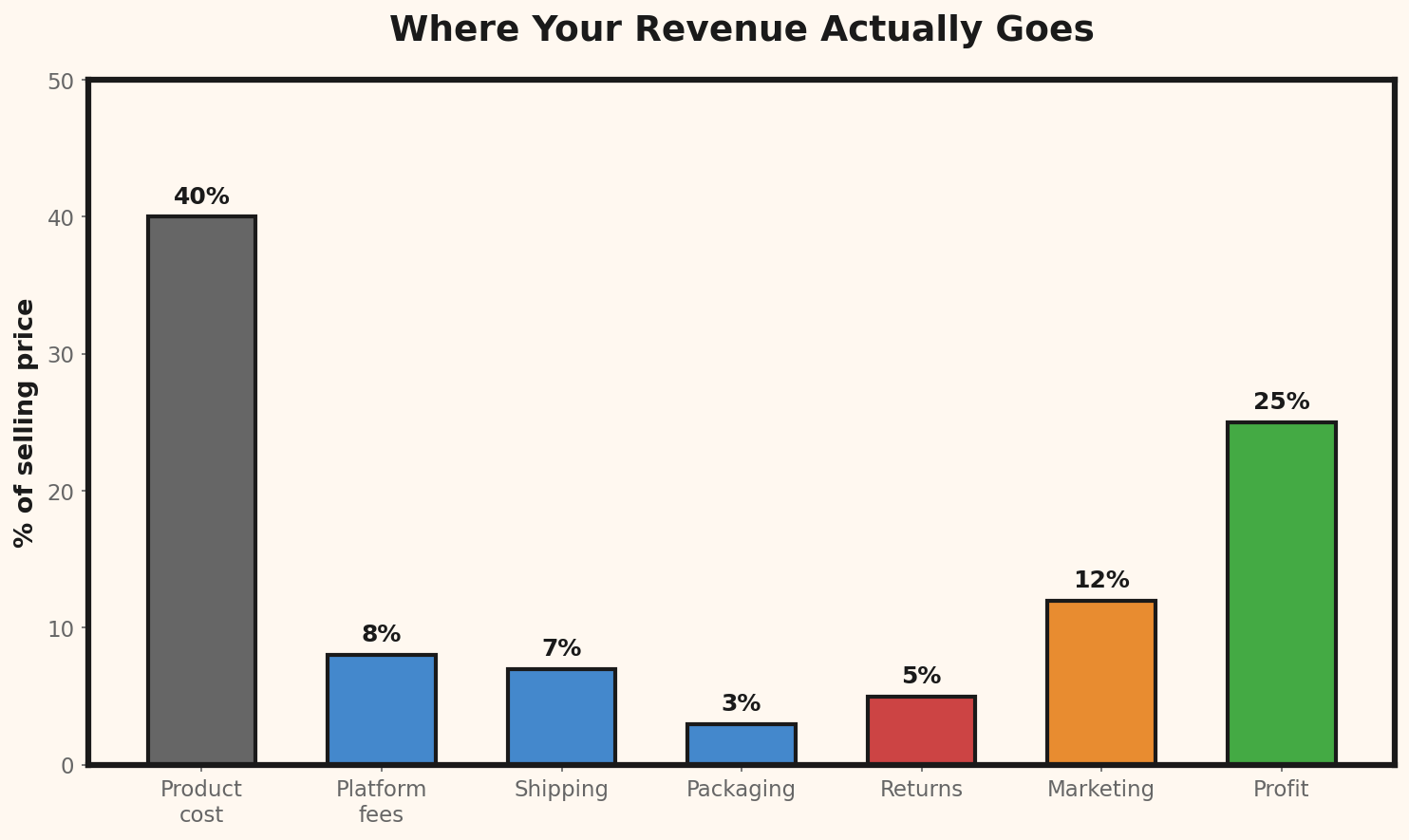
Before you set a price, you need to know the full cost of your product. Most sellers overlook hidden costs: Direct costs (per unit):- Purchase price / manufacturing cost
- Shipping to warehouse
- Packaging
- Platform fees (e.g., Amazon 8–15%, Shopify 2.9%)
- Payment processing fees
- Returns (calculate your average return rate)
- Platform subscription
- Marketing (spend / units sold)
- Warehousing
- Customer support
Purchase price:        $40.00
Shipping:               $5.00
Packaging:              $3.00
Platform fee (10%):    $10.00 (at $100 price)
Returns (8%):           $4.00

True cost: $62.00| Cost Component | Amount | % of Sale Price |
|---|---|---|
| Purchase price | $40.00 | 40% |
| Shipping to warehouse | $5.00 | 5% |
| Packaging | $3.00 | 3% |
| Platform fee (10%) | $10.00 | 10% |
| Returns (8%) | $4.00 | 4% |
| Total cost | $62.00 | 62% |
| Profit margin | $38.00 | 38% |
Step 2: Establish Three Price Points
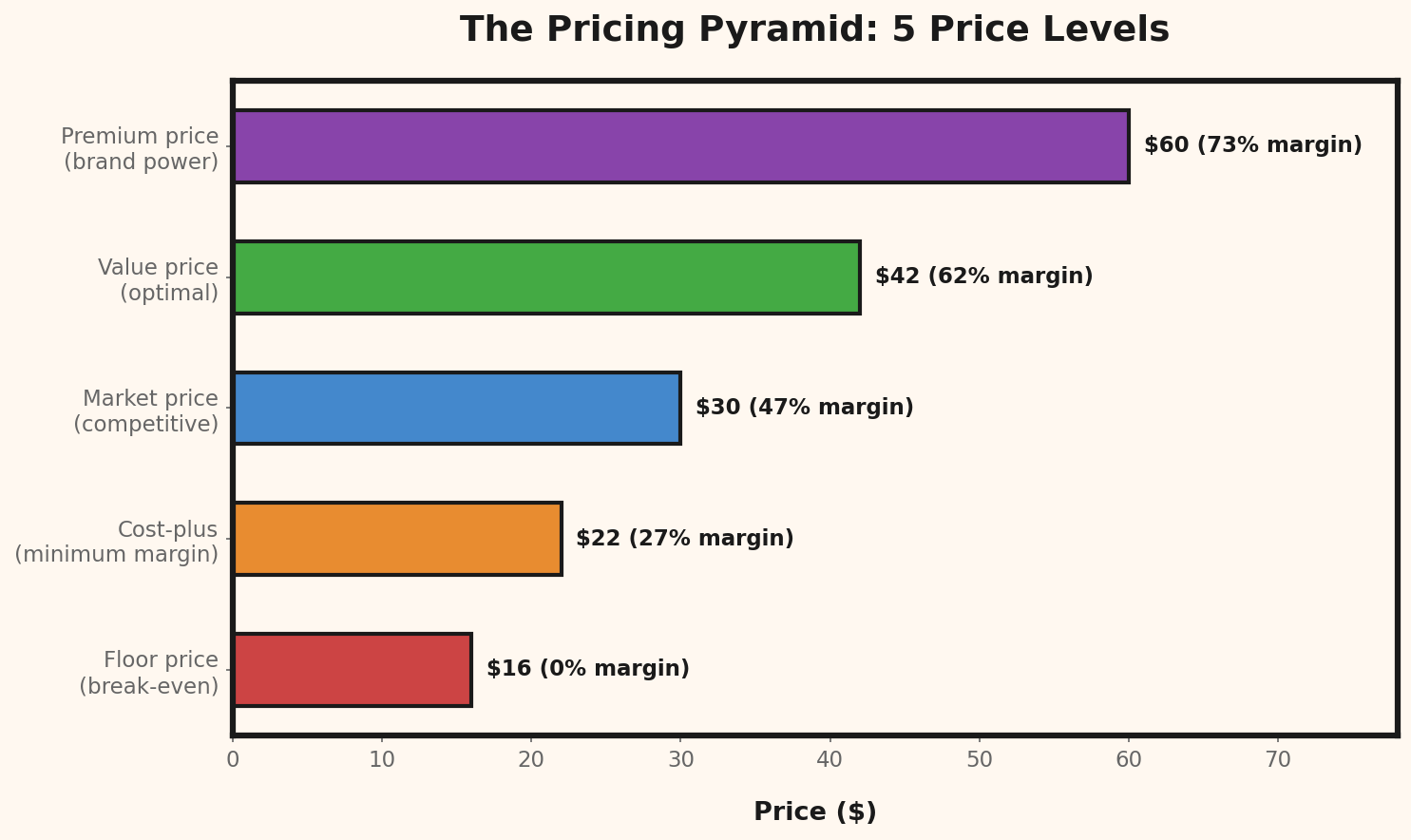
Every product needs three prices:
Source: Unsplash
Step 3: Choose a Pricing Strategy
| Strategy | How It Works | Best For | Risk Level |
|---|---|---|---|
| Cost-plus | Fixed markup on costs | Beginners, stable markets | Low |
| Competitor-based | Price relative to competition | Competitive markets | Medium |
| Psychological | Leverages perception (e.g. $9.99) | Consumer goods, B2C | Low |
| Dynamic | Adjusts based on demand/season | Fashion, travel, seasonal | High |
Strategy 1: Cost-Plus Pricing
The simplest approach: add a fixed markup to your costs. Markup calculation example:True product cost: $62.00
Desired margin: 40%
Selling price = cost / (1 − margin)
Selling price = 62 / (1 − 0.40) = 62 / 0.60 = $103.33 → $99.99
At $99.99:
Margin: 99.99 − 62 = $37.99 (38%)- Electronics: 15–30%
- Clothing: 100–300%
- Cosmetics: 50–150%
- Handmade products: 200–400%
Strategy 2: Competitor-Based Pricing
Set your prices relative to the competition:- Price leader: 5–15% below the market average
- Market rate: within 3% of the average
- Premium: 10–30% above the average
Strategy 3: Psychological Pricing

Source: Unsplash
- Charm pricing: $49.99 instead of $50 — still works
- Strikethrough pricing: show the original price next to the current one
- Bundles: "Buy 3 for $120" (instead of 3×$45 = $135)
- Free shipping threshold: set it 20–30% above your average cart value
Strategy 4: Dynamic Pricing
Adjust prices based on:- Season (higher in peak season, lower off-season)
- Stock levels (last units = higher price)
- Day of the week (weekends vs. weekdays)
Step 4: Monitor and Adjust
Setting a price is just the beginning. Keep an eye on:- Conversion rate — dropping after a price increase? That's a signal
- Gross margin — going up? Your strategy is working
- Competitor prices — changing? Respond deliberately
- Average cart value — rising with bundles?
Fixed monthly costs:       $2,000 (rent, tools, subscriptions)
Variable cost per unit:    $62.00
Selling price per unit:    $99.99

Contribution per unit = 99.99 − 62.00 = $37.99
Break-even units = 2,000 / 37.99 = 53 units/month

You need to sell at least 53 units per month to cover all costs.